Reviewed and updated: November 1, 2026
After several fragrance tests, scents can begin to blur together. The nose has not “stopped working”; the sensory system is adapting to repeated stimulation, and the room, blotters, clothing, and hands may all be carrying overlapping aroma. The most reliable reset is not a magic ingredient. It is fewer tests, fresh air, neutral surroundings, and enough time between decisions.
Limit the session before fatigue begins
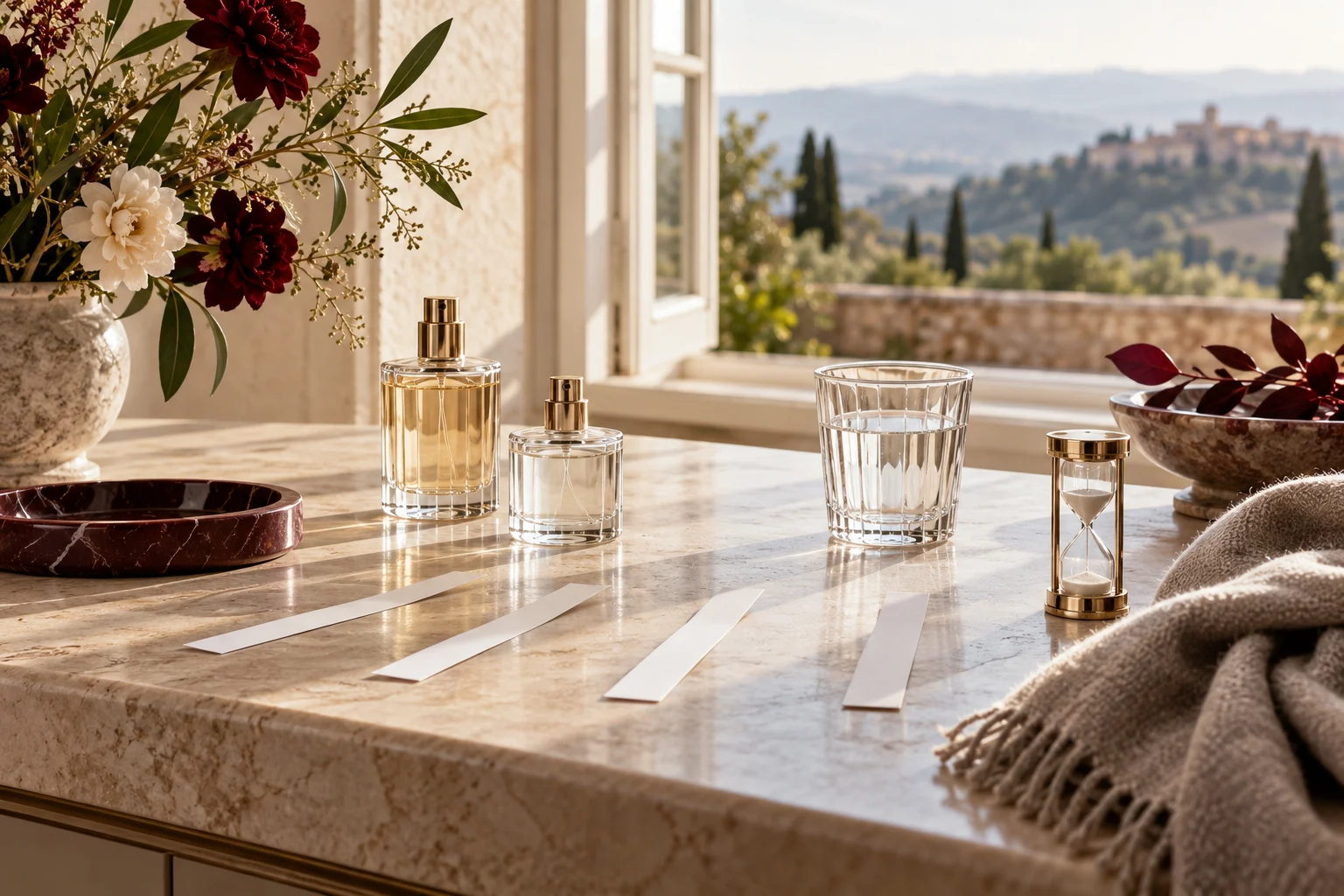
Plan to test a small group rather than an entire counter. Three or four fragrances are usually enough for a useful comparison. Start with the lightest or most transparent style and move toward richer, longer-lasting scents. Write the names on blotters before spraying so you do not need to identify them by memory later.
Space the blotters apart and keep them off scented surfaces. A handbag, wool coat, paper bag, or cosmetic pouch can absorb aroma and contaminate the next test. Use a clean tray or hold each strip by the unsprayed end.
Step into truly fresh air
Leave the fragrance area for several minutes. Outdoors is ideal when safe and practical; otherwise move near an open window or a well-ventilated unscented room. Do not carry all the blotters with you. The purpose is to reduce the background concentration, not simply move the cloud.
Breathe normally. Repeated deep sniffs can make the session more tiring and may cause discomfort. If a fragrance triggers headache, nausea, coughing, or irritation, end the session and move to fresh air rather than trying to “reset” and continue.
Skip the coffee-bean myth
Coffee beans add another strong aroma; they do not erase the fragrances already present. Smelling coffee can create contrast, but it also adds roast, smoke, and bitter associations that may influence the next perfume. A neutral pause and fresh air are more dependable.
Drinking plain water can make a long shopping session more comfortable, but water is not a nasal cleanser. Avoid mint gum, flavored drinks, hand cream, and strongly scented sanitizer while comparing fragrances. The goal is to reduce extra signals.
Use skin selectively
Blotters are useful for narrowing choices, but the final decision should be made on clean skin when appropriate. Test only one fragrance per wrist or forearm area, keeping enough distance that they do not overlap. Do not rub the application; friction and mixing can change the early impression.
If you already applied fragrance before arriving, use blotters and postpone skin testing. A previous scent on sleeves, jewelry, or watchbands can remain for hours. Our guide to testing perfume on skin and paper explains how the two methods answer different questions.
Give the fragrance time
The first minutes emphasize volatile notes. Wait before making a decision and revisit the blotter at intervals. Write brief impressions such as “bright citrus,” “dry wood,” or “too sweet after 30 minutes.” Notes are more useful than repeatedly smelling the same strip until it becomes faint.
Keep the blotter in an unscented envelope if you want to revisit it later, and label the envelope. Do not seal several strips together. At home, compare them in separate rooms or at different times of day.
Reset the environment
Fragrance can cling to scarves, masks, hair, and upholstery. Remove a scented scarf and wash hands with an unscented product if overspray landed on them. Do not spray into the air to “clear” a previous perfume; that increases the concentration. Ask for blotters and use one controlled spray at the recommended distance.
Retail spaces often contain candles, diffusers, cleaning products, and other customers’ sprays. If the background is strong, take labeled blotters outside and continue the evaluation later. A difficult environment is not a reason to make a rushed purchase.
Know when to stop
If every scent begins to smell equally sharp, sweet, or weak, the session is finished. Take the blotters home and return another day for skin testing. Fatigue can also make a familiar fragrance seem unusually quiet, tempting you to overspray. Do not increase the number of sprays to compensate.
People with asthma, migraine, allergies, or fragrance sensitivity should follow their health professional’s guidance and avoid testing environments that provoke symptoms. Fragrance evaluation should never require pushing through physical discomfort.
Build a simple testing kit
Carry a pencil, small unscented envelopes, and a note card. Pencil is useful because ink can smudge, and simple envelopes keep blotters separate. Record the full fragrance name, concentration, test location, time, and one or two impressions. Avoid storing the kit near perfume samples.
A phone note works too, but bright screens and shopping distractions can make the process feel hurried. The important point is to capture enough information that you do not need to resmell every strip repeatedly. Our guide to keeping fragrance testing notes offers a reusable structure.
Compare on different days
For an important purchase, test finalists on separate days. Weather, skin condition, clothing, and setting influence perception. A scent that feels overwhelming in a warm store may sit differently outdoors, while a quiet fragrance may become more noticeable in a small room.
Wear one finalist through an ordinary day and note comfort, development, and whether it transfers strongly to clothing. Ask close contacts about projection only if that matters to your use. Personal enjoyment is more important than collecting a long list of notes.
A calm reset routine
Cap the session at a few fragrances, label every blotter, step into fresh air, drink plain water if desired, and wait. Use skin only for finalists, keep scented objects separate, and stop when the distinctions disappear. There is no prize for testing the most bottles in one visit.
Good fragrance decisions come from distance and repetition, not sensory endurance. A shorter session today and a second test tomorrow will usually reveal more than another round of sprays in a saturated room.
Keep discovery separate from buying pressure
A useful test does not need to end with a purchase. Photograph the bottle label or write down the exact concentration—eau de toilette, eau de parfum, parfum, or another format—because products with the same name can develop differently. Note the retailer and date, but avoid judging longevity from a blotter alone.
If a salesperson offers additional flankers, samples, or layered combinations, finish the original comparison first. New options reset the decision and add scent to the room. Ask for labeled samples when available and evaluate them on separate days. This preserves the value of the visit without forcing a conclusion while the nose is tired.
Protect the people around you
Use one controlled spray per blotter and point it away from faces, food, and other customers. Ask permission before spraying near anyone. At home, test in a ventilated space and keep fragrances away from children and pets. Wash accidental skin exposure if irritation occurs, and follow the product label for safety guidance.
The goal is not to become insensitive to a strong fragrance. It is to notice when perception is changing and pause early. Courtesy and ventilation make the process more informative for everyone.