
Reviewed and updated: October 15, 2026
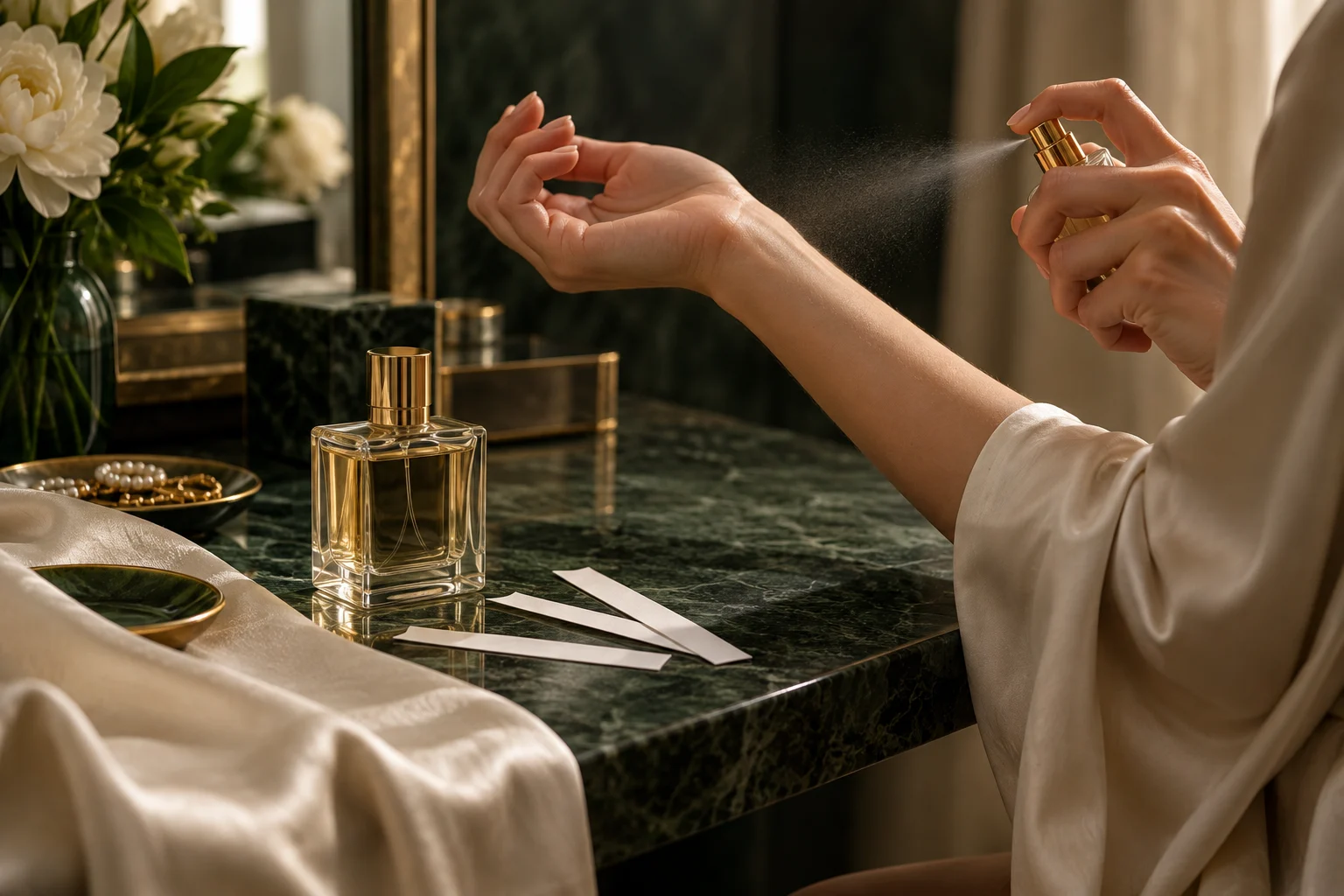
Begin with blotter strips
Paper is efficient for comparing openings without covering both arms in fragrance. Label each strip before spraying, use the same distance and number of sprays, and keep strips separated. Smell from a short distance rather than pressing wet fragrance against the nose. The first minute is only the opening, not the full scent.
Limit the number you compare
After several fragrances, the differences become harder to read. Start with three or four and take fresh-air breaks. Coffee beans do not reset the nose in a magical way; neutral air and time are more dependable. If everything begins to smell similar, stop and return another day rather than forcing a choice.
Wait for the paper drydown
Revisit strips after fifteen minutes, an hour, and later in the day. Keep notes on broad impressions such as citrus, woods, sweetness, dryness, or smoke. Paper will not reproduce skin warmth and chemistry, but it reveals whether the middle and base remain appealing once the bright opening fades.
Move only finalists to skin
Choose one fragrance for each wrist or inner elbow, keeping enough distance to prevent overlap. Apply to clean, unscented skin without lotion or another perfume underneath. Do not test on irritated, freshly shaved, or broken skin. If you have known sensitivities, review ingredients and seek medical advice before exposure.
Do not rub the wrists together
Rubbing spreads the liquid, adds friction, and makes the comparison less controlled. Let each application dry naturally. Avoid immediately covering the area with a tight sleeve or watch. Keep the amount modest; testing more heavily than you would wear can exaggerate projection and make the room unpleasant for other people.
Observe in your normal environment
A store’s lighting, ventilation, and surrounding scents affect perception. Wear the finalist through ordinary indoor and outdoor conditions. Notice the scent at arm’s length rather than checking the wrist every few minutes. Ask whether it remains comfortable for you and considerate of coworkers, family, and fragrance-sensitive spaces.
Separate longevity from preference
A fragrance can last a long time and still be the wrong choice. Record when you first stop noticing it, but remember that nose fatigue can hide a scent that others still detect. Concentration labels such as EDT and EDP suggest format, not guaranteed strength. Formula, dose, skin, climate, and fabric all influence performance.
Make the purchase after a full wear
If possible, obtain an authorized sample and test on another day. Check the exact name, concentration, bottle size, and seller because flankers can look similar. Store the sample away from heat and light. A deliberate wear test is more useful than a discount deadline, a viral ranking, or an attractive opening alone.
A practical one-week plan
Use this guide as a short experiment rather than changing everything at once. Read the full process, choose the first step that addresses a real problem, and note what you are trying to learn. A written plan makes the result easier to judge and prevents an enthusiastic first day from turning into an inconsistent routine.
- Begin with blotter strips: write down the one choice you will test, keep the other variables steady, and review the result before adding another change.
- Limit the number you compare: write down the one choice you will test, keep the other variables steady, and review the result before adding another change.
- Wait for the paper drydown: write down the one choice you will test, keep the other variables steady, and review the result before adding another change.
- Move only finalists to skin: write down the one choice you will test, keep the other variables steady, and review the result before adding another change.
- Do not rub the wrists together: write down the one choice you will test, keep the other variables steady, and review the result before adding another change.
- Observe in your normal environment: write down the one choice you will test, keep the other variables steady, and review the result before adding another change.
- Separate longevity from preference: write down the one choice you will test, keep the other variables steady, and review the result before adding another change.
- Make the purchase after a full wear: write down the one choice you will test, keep the other variables steady, and review the result before adding another change.
Review the result
At the end of the week, compare the outcome with your starting point. Keep the steps that were easy, safe, and useful. Revise anything that depended on guesswork, caused discomfort, or was difficult to repeat. When a product manual, care label, venue rule, or healthcare professional gives more specific direction, follow that guidance over a general article.
The best routine is understandable enough to explain and simple enough to perform the same way next time. Save the relevant links, keep a short note with the equipment or product, and schedule another review when conditions change. That small record turns a one-time tip into a dependable habit.
Questions to ask before the next attempt
What changed, what stayed constant, and what evidence supports the conclusion? Was the starting condition documented clearly? Did convenience or expectation influence the result? Answering those questions keeps the next attempt focused. It also helps another family member follow the same process without relying on memory or assumptions.
Take a fresh look in normal conditions rather than judging immediately. Note any safety warning, maintenance need, or storage issue that surfaced. If the result is unclear, repeat the smallest reasonable test instead of making several adjustments together. Consistency is more informative than complexity, and stopping is always appropriate when instructions, comfort, or safety are uncertain.
Keep the routine easy to audit
Store the instructions, notes, and any relevant model or product details in one place. Date the note so an older recommendation is not mistaken for current guidance. Before repeating the routine, confirm that the equipment, garment, product, location, or personal circumstances have not changed. Small differences can matter, and a quick review is usually easier than correcting a preventable mistake afterward.
Share the plan with anyone else who may use it. Clear steps reduce improvisation and make it easier to notice wear, discomfort, unexpected results, or missing information. Retire a step that no longer serves a purpose, and avoid adding a new purchase merely to make the routine look complete. Practical care comes from attention, appropriate limits, and decisions that can be explained.
Finally, revisit the original goal before calling the process finished. A routine is successful when it solves the stated problem safely and predictably, not when it contains the most steps. Keep the evidence that helped, discard assumptions that did not hold up, and make the next decision from the result you actually observed.