Reviewed and updated: October 14, 2026
Choose stability over display
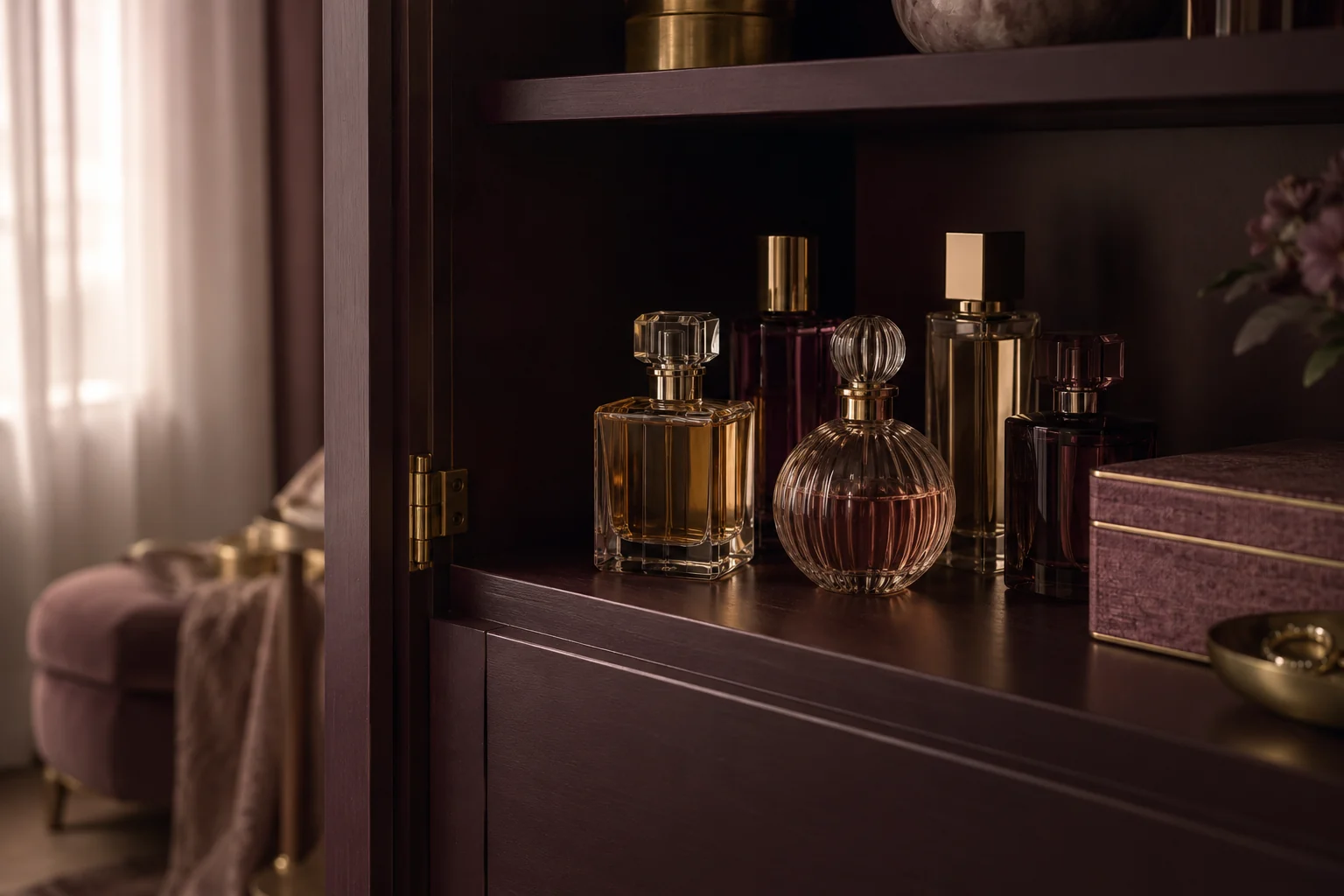
Perfume bottles are designed to be seen, but a sunny dresser or bathroom shelf exposes them to changing temperature and light. Choose a dark cabinet, drawer, or closet in a climate-controlled room. The ideal location is boring: shaded, dry, and away from radiators, windows, vents, and appliances that warm the surrounding air.
You do not need a special refrigerator for an ordinary collection. A stable household environment is easier to manage than repeated moves between cold and warm locations. Check any brand-specific storage guidance for unusual formulas or collector editions.
Keep bottles out of direct and strong light
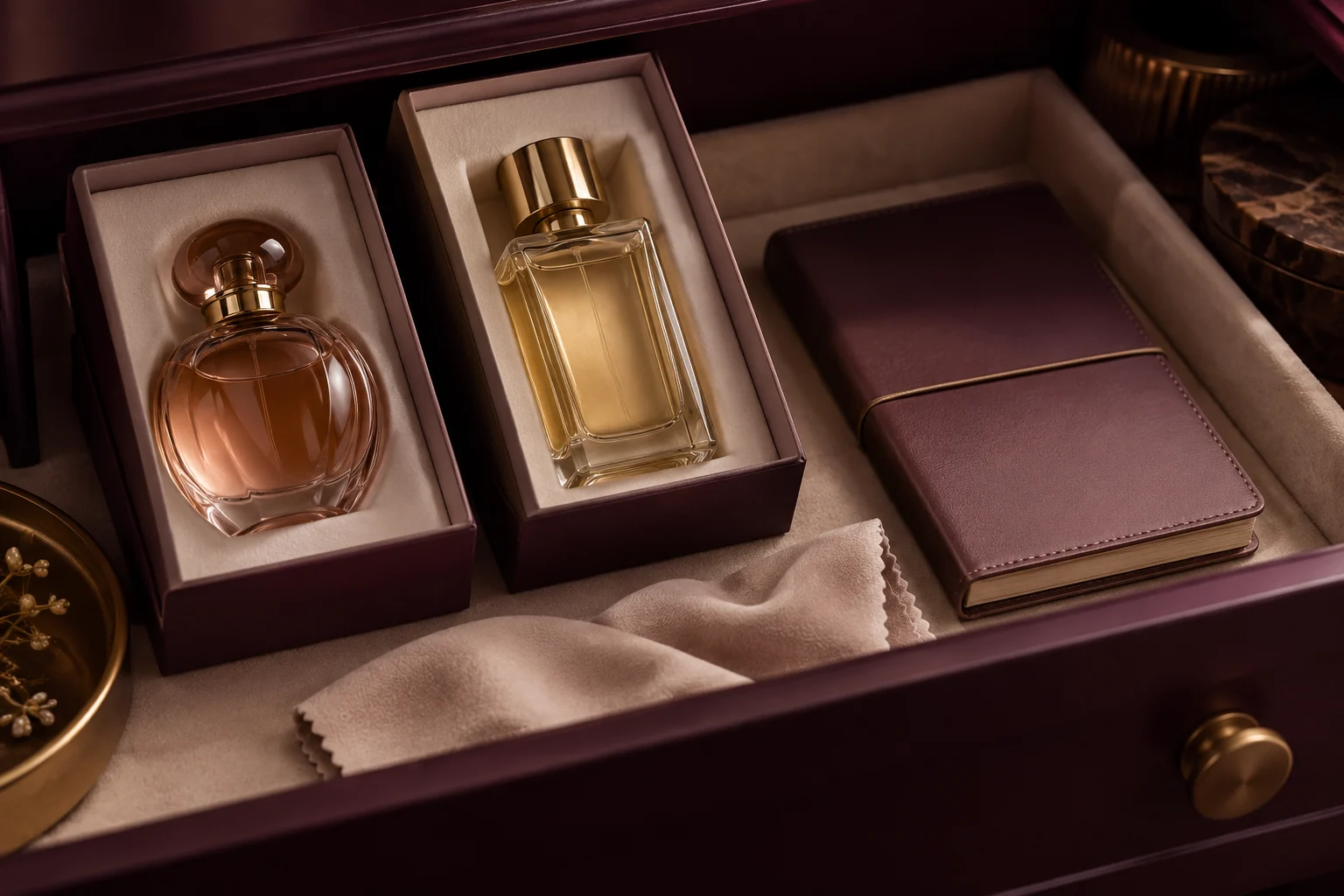
Sunlight can warm the liquid and expose it to ultraviolet and visible light. Strong display lighting can also add heat over long periods. Keep the original box when practical, especially for clear bottles, or store the bottle inside a closed cabinet.
A brief look at the bottle will not ruin it. The concern is cumulative exposure. If you enjoy displaying a collection, use empty bottles or boxes in the bright area and keep the perfume you wear in shaded storage.
Avoid the bathroom temperature cycle
Bathrooms move from cool to warm and humid whenever someone showers. Bottles may also sit near sinks where water can collect around caps and labels. A bedroom closet or interior cabinet generally offers a steadier environment.
Humidity outside a sealed bottle may not enter the fragrance immediately, but it can damage packaging, corrode decorative parts, and make labels peel. The repeated temperature shift is another reason to choose a different room.
Close the bottle promptly
Oxygen enters when a splash bottle is left open or a stopper does not seat correctly. Replace the cap or stopper after use and keep the neck clean. Atomizer bottles reduce routine exposure, but the pump and collar should remain intact.
Do not decant a full bottle unless the smaller format solves a real need. Every transfer introduces air and creates a chance for contamination or a leaking seal. For travel, fill a clean, compatible atomizer with only what you expect to use and label it clearly.
Store bottles upright and supported
Keep perfume upright unless the manufacturer provides other instructions. A horizontal bottle can keep liquid against the sprayer or stopper and increase the effect of a weak seal. Use a tray or divider so tall bottles cannot knock into one another when a drawer opens.
Heavy bottles belong on a low, stable shelf rather than above eye level. Keep them away from children and pets. Fragrance is a cosmetic product, and it should not be swallowed or used as a room toy.
Watch for signs of change
Compare a fragrance with your memory and, if available, an older photo of the liquid. A noticeable change in color, clarity, scent, or spray behavior can indicate aging, contamination, or a faulty atomizer. Some natural color shift can occur without making the product dangerous, so avoid diagnosing from color alone.
If the perfume smells sharply different, causes new irritation, or shows debris that was not present before, stop applying it. Contact the brand for guidance and seek medical advice for a reaction. Do not try to restore a changed fragrance by adding alcohol, water, or another perfume.
Organize by use, not just brand
Keep daily bottles near the front and occasional or seasonal bottles farther back. This reduces handling and makes it easier to notice a loose cap or leak. Add the purchase or opened date to a private inventory if you want to track how the collection changes.
Our explanation of what perfume is provides context for concentration and composition, while the long-lasting perfume guide discusses wear. Storage can protect a formula from avoidable stress, but it cannot make every scent project longer on skin.
Handle vintage and valuable bottles carefully
An older bottle may have a brittle stopper, evaporated liquid, or a weakened bulb atomizer. Do not force the closure. Keep the bottle upright in a padded, dark box, photograph the condition, and consult the brand or a qualified conservator before attempting repair.
Value and authenticity are separate from safe personal use. A collectible bottle can be preserved as an object even if the contents are no longer suitable for skin. Avoid buying an opened vintage fragrance solely on a seller's claim that it was stored perfectly.
Keep a travel decant fresh
Use a clean atomizer made for fragrance, fill it without touching the nozzle to unclean surfaces, and write the fragrance name and fill date on it. Store it inside a small sealed pouch to protect luggage from leaks. Keep it away from a hot car, direct sun, and freezing conditions.
A small decant experiences more air relative to the liquid than a full bottle, so use it rather than leaving it forgotten for years. Do not return unused decant liquid to the original bottle.
A simple perfume storage checklist
Choose a cool, shaded interior cabinet; keep the bottle upright; close it after each spray; leave it in the original box when useful; avoid bathroom humidity, windows, heaters, and hot cars; and check occasionally for leaks or obvious changes.
Good storage does not require complicated equipment. It requires consistency. A bottle that stays closed, supported, and away from repeated heat and light has a better chance of smelling as intended when you reach for it next season.
Make a seasonal collection check
Twice a year, take bottles out one at a time and inspect the atomizer, cap, label, and storage surface. Wipe dust from the exterior with a dry soft cloth, never by spraying household cleaner near the nozzle. Look for sticky residue that could signal a leak and make sure boxes have not absorbed moisture. Check the cabinet itself for warmth at different times of day, because a nearby pipe or sunny wall may create a change that is easy to miss.
Update your inventory and move bottles you use often to an accessible row. If a fragrance no longer suits you but remains in good condition, consider a lawful gift to someone who can use it instead of leaving it in heat or sunlight. Keep original packaging and purchase details for valuable bottles, but remember that packaging cannot correct poor storage. Stable temperature, darkness, an intact closure, and careful handling remain the practical priorities.