Reviewed and updated: October 24, 2026
Good fragrance notes record context, timing, and personal response without turning one wear into a universal verdict. A simple log helps compare samples and prevents duplicate purchases.
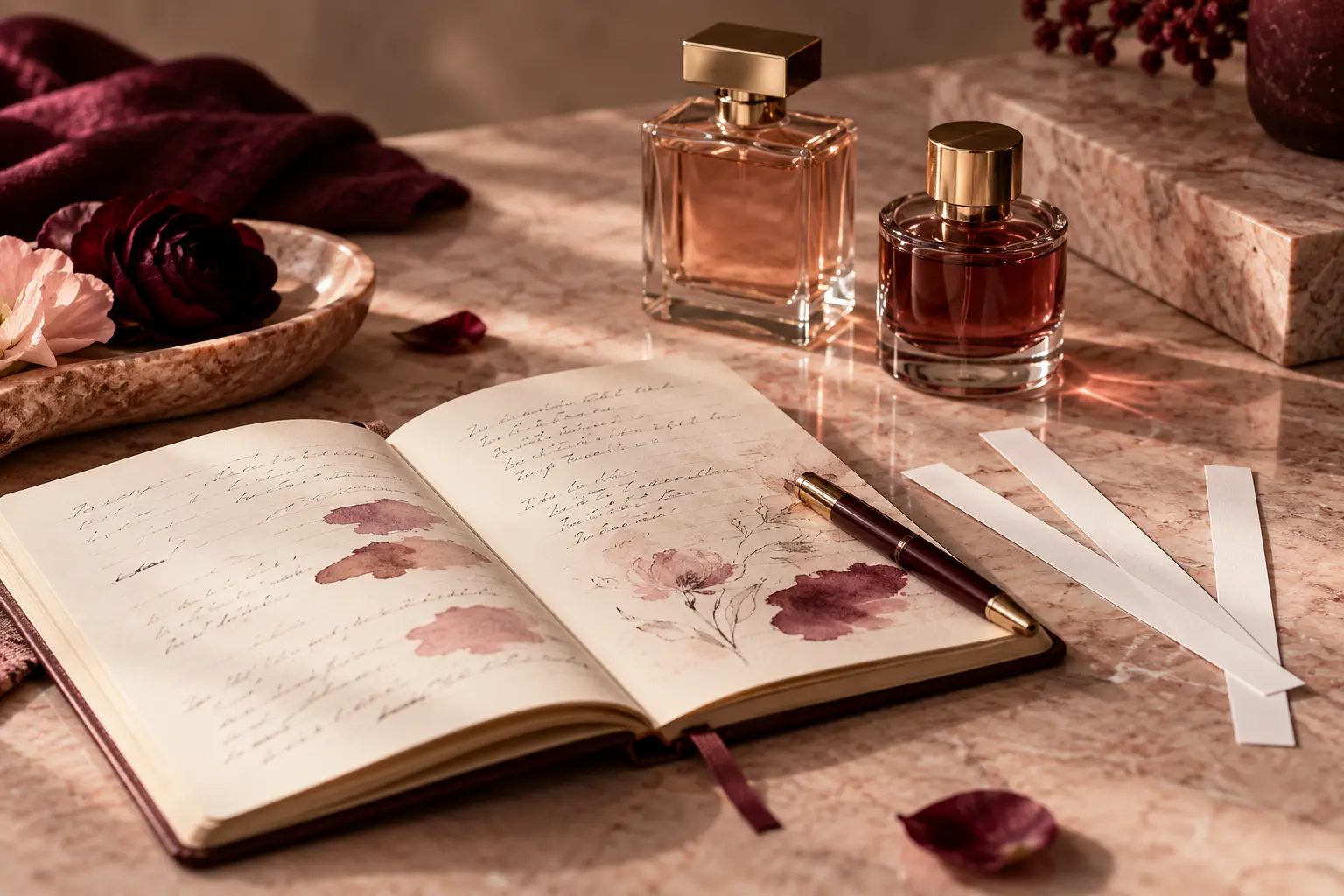
Record the exact fragrance
Write the brand, full name, concentration, sample source, and batch or package details when available. Similar flankers can differ more than their names suggest. Make this part of a repeatable routine: check the starting condition, follow the relevant instructions, and record what changed. That keeps how to keep fragrance testing notes that are actually useful grounded in observable results instead of assumptions or a single unusually good or bad experience.
Note the testing conditions
Temperature, humidity, location, clothing, skin products, and recent fragrances influence perception. Record enough context to explain an unusual wear. Verify the exact label, model, material, or setting before acting. Small differences in a package or environment can change the right method, so change one variable at a time and stop when condition, comfort, or safety gives a reason to stop.
Start on paper
Use a labeled blotter for the opening and avoid placing many wet strips together. Paper is a screening tool, not a substitute for a careful skin test. A useful decision should still make sense on an ordinary day. Prepare the workspace, keep the process simple, and review the result before repeating it. Careful notes are more dependable than memory when products, conditions, or schedules change.
Limit skin tests
Try one fragrance per area and keep enough distance to avoid overlap. Patch-test cautiously and stop for irritation rather than pushing through a reaction. Make this part of a repeatable routine: check the starting condition, follow the relevant instructions, and record what changed. That keeps how to keep fragrance testing notes that are actually useful grounded in observable results instead of assumptions or a single unusually good or bad experience.
Use timed checkpoints
Record the opening, early development, middle, and late drydown at consistent intervals. Avoid constant sniffing, which quickly causes fatigue. Verify the exact label, model, material, or setting before acting. Small differences in a package or environment can change the right method, so change one variable at a time and stop when condition, comfort, or safety gives a reason to stop.
Describe before rating
List recognizable impressions, texture, sweetness, dryness, projection, and change before assigning a score. Description remains useful even when preference changes. A useful decision should still make sense on an ordinary day. Prepare the workspace, keep the process simple, and review the result before repeating it. Careful notes are more dependable than memory when products, conditions, or schedules change.
Separate performance from liking
A quiet scent can be beautiful and a powerful scent can be unpleasant. Record longevity and reach separately from whether the profile fits the occasion. Make this part of a repeatable routine: check the starting condition, follow the relevant instructions, and record what changed. That keeps how to keep fragrance testing notes that are actually useful grounded in observable results instead of assumptions or a single unusually good or bad experience.
Retest on another day
Sleep, congestion, weather, and nearby odors can distort a single trial. A second controlled wear provides better evidence before buying a bottle. Verify the exact label, model, material, or setting before acting. Small differences in a package or environment can change the right method, so change one variable at a time and stop when condition, comfort, or safety gives a reason to stop.
Review the collection role
Ask what occasion or profile the fragrance adds and whether a current bottle already fills it. Notes should improve decisions, not justify every sample. A useful decision should still make sense on an ordinary day. Prepare the workspace, keep the process simple, and review the result before repeating it. Careful notes are more dependable than memory when products, conditions, or schedules change.
Put the guide into practice
Begin by writing down the result you want from how to keep fragrance testing notes that are actually useful. Include the starting condition, the people or equipment involved, and the limit that would make you stop. This short plan prevents an attractive feature, habit, or shortcut from replacing the real purpose. It also makes the final result easier to judge because the decision was defined before the work began.
Prepare the space and gather only what the first attempt requires. Use the checkpoints in Record the exact fragrance and Note the testing conditions before adding optional steps. Read current labels and instructions in full, keep packaging or model information nearby, and avoid mixing advice from products that merely look similar. When a condition changes, pause and verify rather than improvising.
During the process, make one deliberate change at a time. Note the setting, amount, timing, fit, or environmental condition that could affect the outcome. If the result is uncomfortable, confusing, damaged, or inconsistent, return to the last known safe point. More intensity, more product, or more repetition does not correct a poor match and can make the original problem harder to identify.
Use photographs, a short checklist, or a dated note when visual condition matters. The record does not need to be elaborate; it only needs to preserve the exact choice and its result. This is especially useful when several people share equipment, when packages look alike, or when weeks pass between uses. Remove old notes when they no longer describe the current item.
Finish with a brief review based on review the collection role. Record what worked, what should change, and whether the same method still fits the next use. Store equipment and remaining products according to their instructions, clean the work area, and keep the notes with the relevant model or label. A dependable routine is simple enough to repeat and specific enough to catch a changed condition.
Quick checklist
- Record the exact fragrance
- Note the testing conditions
- Start on paper
- Limit skin tests
- Use timed checkpoints
- Describe before rating
Frequently asked questions
What should I verify first?
Start with the exact product, material, person, and setting involved. Read the current label or instructions and do not apply a rule from a similar-looking item without checking.
How can I compare results?
Keep the starting condition steady, change one variable, and record the result. Repeat only when the process remains safe and the comparison answers a useful question.
When should I stop?
Stop for damage, irritation, unusual heat, odor, poor fit, confusing instructions, or any condition that makes the next step uncertain. Replace, reassess, or seek qualified help as appropriate.