
Reviewed and updated: October 26, 2026
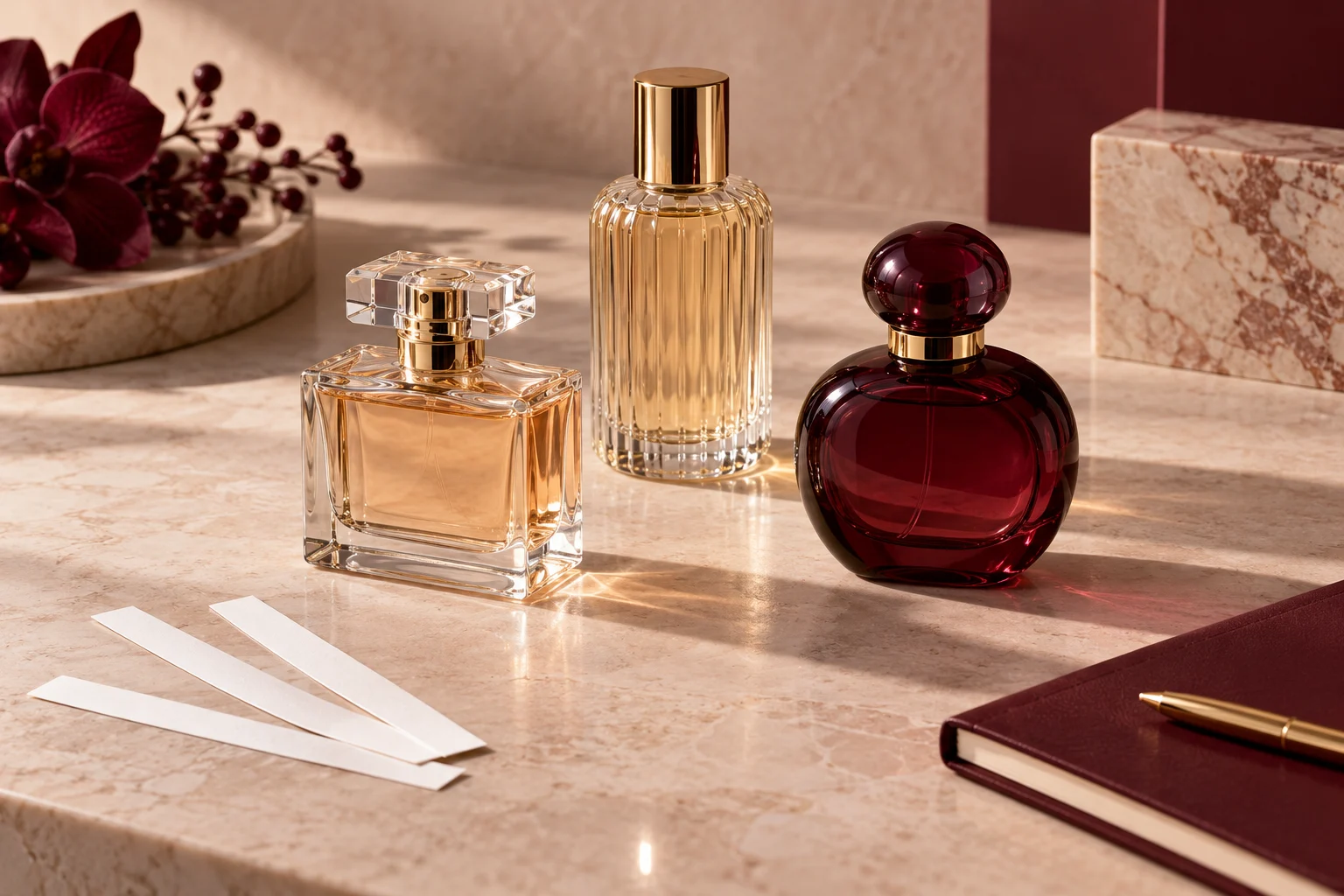
A useful skin test needs fewer fragrances, clean test areas, time between stages, and notes that separate the opening from the drydown. More sprays rarely create better information.
Start with blotters
Use labeled paper scent strips to narrow a larger set before anything touches skin. Spray from a consistent distance in moving air, let the alcohol flash briefly, and write the name immediately. Avoid waving several saturated strips together because their scent clouds will blend. Make the decision from the real routine rather than a feature list. Record the exact starting condition, follow the relevant instructions, and change one variable at a time. This makes the result easier to judge and keeps an attractive shortcut from becoming a repeated mistake.
Limit the skin finalists
Choose one or two finalists for skin rather than covering both arms with many fragrances. Leave clear space between test areas and avoid scented lotion, soap residue, or another perfume. If skin is irritated, broken, or reactive, skip the test. A useful comparison separates what can be verified from what is merely advertised. Note the model, material, setting, or method actually used, then review the result before repeating it. Small notes are more dependable than memory when conditions change.
Use a controlled amount
Apply a normal light test spray without rubbing wrists together. Rubbing changes evaporation and transfers material. Keep fragrance away from eyes, face, jewelry, watchbands, and fabrics that may stain. Follow the product label and store samples away from children and heat. Keep the process simple enough to repeat. Prepare the workspace first, follow safety and care directions, and stop when something looks, smells, sounds, or feels wrong. A careful routine usually produces a better result than adding steps without a clear purpose.
Record the opening briefly
Note the first impression after the spray settles: brightness, sweetness, spice, fruit, smoke, texture, or another clear word. Do not decide from the opening alone. Some top notes are designed to change quickly, and a strong alcohol impression is not the full wear. Make the decision from the real routine rather than a feature list. Record the exact starting condition, follow the relevant instructions, and change one variable at a time. This makes the result easier to judge and keeps an attractive shortcut from becoming a repeated mistake.
Revisit the middle
Check again after the fragrance has developed without constantly smelling the spot. Step into fresh air between checks. Record what became clearer, softer, drier, sweeter, or more floral. Compare each fragrance to its own earlier stage before comparing it with a different scent. A useful comparison separates what can be verified from what is merely advertised. Note the model, material, setting, or method actually used, then review the result before repeating it. Small notes are more dependable than memory when conditions change.
Give the drydown real time
A later check shows the base, skin interaction, and whether the fragrance stays comfortable. Notice scent at a normal distance rather than pressing the nose to skin. Longevity and projection vary with amount, environment, skin, and individual perception. Keep the process simple enough to repeat. Prepare the workspace first, follow safety and care directions, and stop when something looks, smells, sounds, or feels wrong. A careful routine usually produces a better result than adding steps without a clear purpose.
Reset your nose
Fresh outdoor air and a break are more useful than trying to erase odor with another strong smell. Coffee beans do not reliably reset olfaction; they add another aroma. Stop for the day when everything begins to smell similar, sharp, or indistinct. Make the decision from the real routine rather than a feature list. Record the exact starting condition, follow the relevant instructions, and change one variable at a time. This makes the result easier to judge and keeps an attractive shortcut from becoming a repeated mistake.
Watch for skin reactions
Burning, persistent redness, swelling, hives, breathing trouble, or other concerning symptoms are reasons to stop exposure and seek appropriate medical help. Wash according to professional guidance and product information. A pleasant scent does not override a safety response. A useful comparison separates what can be verified from what is merely advertised. Note the model, material, setting, or method actually used, then review the result before repeating it. Small notes are more dependable than memory when conditions change.
Make the final comparison later
Review notes after the test areas have fully developed. Consider comfort, distinctiveness, likely occasions, and whether the scent earns a place beside bottles already owned. Retest on another day before buying when the first session was crowded, tiring, or affected by illness. Keep the process simple enough to repeat. Prepare the workspace first, follow safety and care directions, and stop when something looks, smells, sounds, or feels wrong. A careful routine usually produces a better result than adding steps without a clear purpose.
Quick checklist
- Label every blotter immediately.
- Limit skin tests to one or two finalists.
- Do not rub test areas together.
- Check opening, middle, and drydown.
- Step into fresh air between checks.
- Stop if irritation or scent fatigue appears.
Why these checkpoints matter
- Label every blotter immediately. This defines the starting condition and prevents the rest of the process from resting on an assumption.
- Limit skin tests to one or two finalists. This narrows the choice to evidence you can verify on the exact label, model, or scene.
- Do not rub test areas together. This checkpoint reduces avoidable risk before another variable is introduced.
- Check opening, middle, and drydown. This keeps the routine compatible with the person, product, material, or equipment involved.
- Step into fresh air between checks. This creates a repeatable step instead of relying on memory or marketing language.
- Stop if irritation or scent fatigue appears. This final review catches changes in condition, availability, or instructions before the next use.
Common questions
How many perfumes can I test in one visit?
Fewer is better. Use blotters first and put only one or two finalists on separate skin areas.
Do coffee beans reset the nose?
They introduce another odor. Fresh air, time, and fewer samples provide a cleaner break.
Why does perfume smell different on skin?
Evaporation, application amount, environment, and individual skin conditions can change perception across the wear.
Keep the decision useful
Write down the exact model, label, starting condition, and result. Change one variable at a time and return to the official instructions when anything is unclear. A short record makes the next decision easier and keeps an isolated result from becoming a rule that does not fit a different product, person, material, or environment.
Review the information again before repeating the process. Stop when comfort, safety, condition, or the manufacturer’s instructions provide a reason to stop. A useful routine stays simple because every step answers a real question.