
Reviewed and updated: October 28, 2026
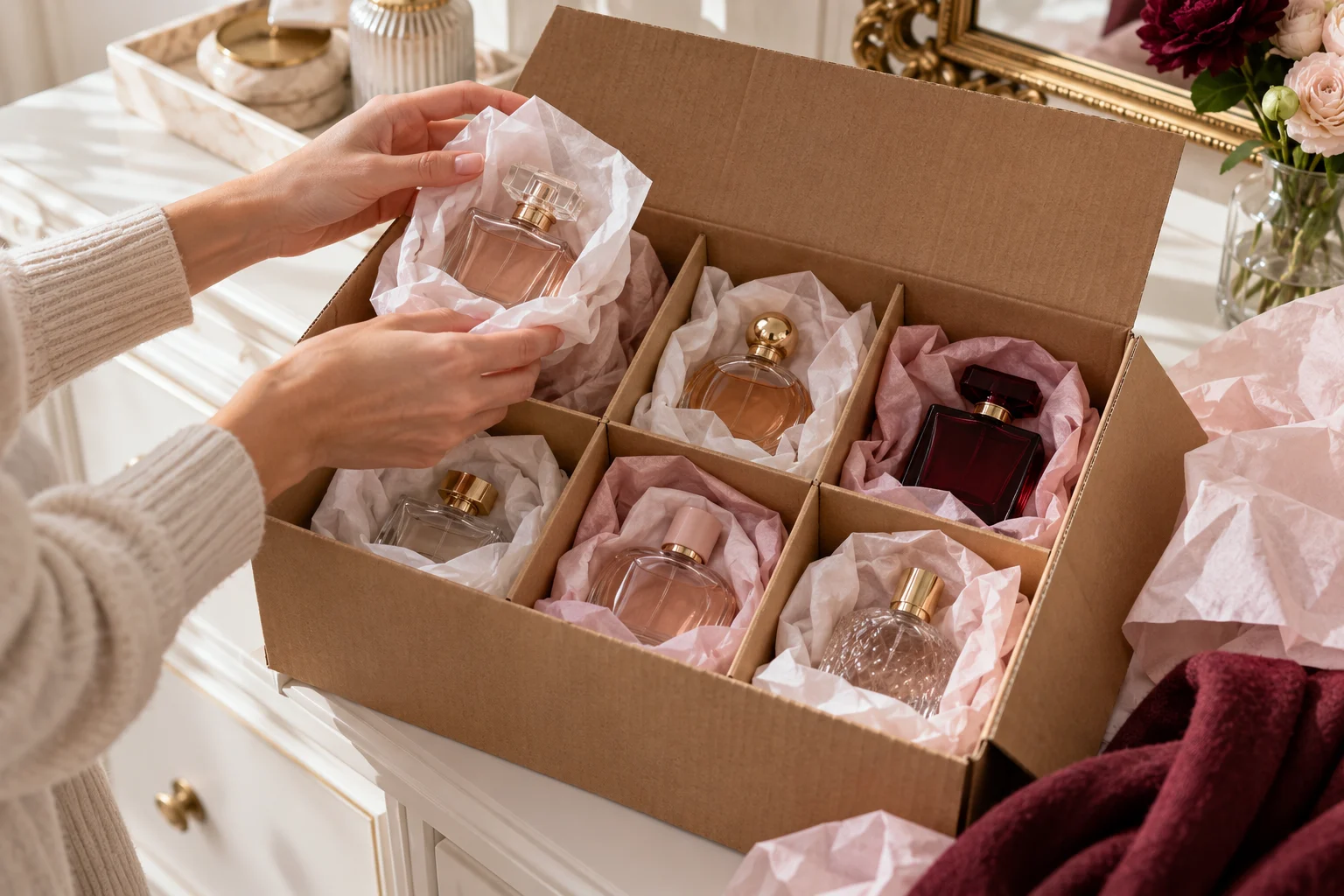
Perfume bottles need protection from impact, leaks, heat, and confusing labels during a move. A small upright box, individual wrapping, an accurate inventory, and climate-aware transport reduce avoidable damage.
Reduce the collection before packing
Set aside empty bottles, damaged sprayers, unknown decants, and fragrances that should not travel. Follow local rules for disposing of alcohol-based fragrance; do not pour it into a drain or leave it for movers without disclosure. Photograph the remaining bottles and record the name, size, approximate fill level, cap condition, and sentimental or replacement importance. Keep purchase records separately for insurance questions. A moving inventory is not a reason to display the collection publicly or post the new address alongside valuable items.
Check mover and transport rules
Perfume contains alcohol and may be treated as a flammable liquid by airlines, postal carriers, freight companies, or professional movers. Ask the actual carrier what is accepted, how it must be declared, and whether opened bottles are excluded. Do not hide fragrance in a box labeled as ordinary toiletries. Rules differ for a personal vehicle, checked baggage, air shipment, and international customs. If the product cannot travel through the planned method, arrange a lawful alternative rather than transferring it to an unmarked bottle.
Inspect every closure and sprayer
Remove decorative outer caps only long enough to inspect the atomizer collar and bottle neck. Tighten nothing unless the package was designed to be tightened by hand. Crimped sprayers should not be twisted. Wipe residue from the exterior with a method safe for the finish, then leave the bottle upright on clean paper for a leak check. A bottle that is already seeping needs expert packaging or disposal guidance; wrapping it tightly and hoping the leak stops can damage labels, coatings, and neighboring items.
Wrap bottles individually
Replace the original cap, place the bottle in a small sealed bag when allowed, and wrap it with several layers of clean soft material. Protect protruding sprayers without pressing on them. Original fitted boxes are useful when dry and structurally sound, but still need cushioning inside the transport carton. Never allow glass bottles to touch. Avoid newspaper ink against labels and finishes, and do not tape directly to the bottle. Mark the outer wrapping with an inventory number instead of relying on seeing through layers.
Use a divided upright carton
Choose a small strong box that can be carried without excessive weight. Add a leak-resistant liner when permitted, cushion the bottom, and create compartments with sturdy dividers. Place bottles upright with enough support that they cannot tip, then fill voids without forcing pressure onto caps. Add absorbent material around, not inside, each protective bag. Close and gently tilt the carton to confirm nothing shifts. Label it according to carrier rules and keep the inventory outside the box so it can be checked without reopening everything.
Control temperature during transit
Heat accelerates fragrance change and can raise pressure in a sealed bottle; freezing and repeated swings can also stress packaging. Do not leave the carton in a parked vehicle, direct sun, attic, or unconditioned storage container. In a personal move, carry it in the climate-controlled cabin only when transport rules and safe vehicle loading permit. Never place it where the box can become a projectile or obstruct controls. For professional transport, ask about temperature exposure and insurance rather than assuming a fragile label provides climate protection.
Unpack before arranging the display
Move the carton to a cool shaded room and let it reach a stable temperature upright. Inspect the outer box and each bag for odor or moisture before removing wrapping. Wear appropriate protection around broken glass and do not operate a leaking sprayer near flame, heat, or electrical sparks. Compare each bottle with the inventory, photograph any damage, and follow the carrier’s claim process. Do not test multiple stressed fragrances immediately; allow intact bottles to settle and clean external residue first.
Create safer storage in the new home
Choose a dark cabinet or drawer away from bathroom humidity, heaters, sunny windows, and children. Stand bottles upright on a stable surface with enough room to lift one without striking another. Keep caps matched and avoid decorative trays that amplify heat or allow sliding. Update the inventory with the new storage location and any damage. Save the moving dividers for future transport only if they remain clean and dry. A bottle with a cracked neck, loose sprayer, or persistent leak should be isolated and handled according to local safety guidance.
Quick checklist
- Confirm carrier rules before packing.
- Inventory and photograph each bottle.
- Leak-test every closure upright.
- Wrap and separate all glass bottles.
- Keep the carton climate controlled.
- Inspect for leaks or breakage before unpacking.
Why these checkpoints matter
- Confirm carrier rules before packing. This defines the starting condition and prevents the rest of the process from resting on an assumption.
- Inventory and photograph each bottle. This narrows the choice to evidence you can verify on the exact label, model, or scene.
- Leak-test every closure upright. This checkpoint reduces avoidable risk before another variable is introduced.
- Wrap and separate all glass bottles. This keeps the routine compatible with the person, product, material, or equipment involved.
- Keep the carton climate controlled. This creates a repeatable step instead of relying on memory or marketing language.
- Inspect for leaks or breakage before unpacking. This final review catches changes in condition, availability, or instructions before the next use.
Common questions
Can movers transport perfume?
Policies vary because alcohol-based fragrance may be restricted. Ask the specific mover and disclose the contents accurately.
Should bottles travel on their sides?
Upright packing generally reduces pressure on sprayers and closures, with individual cushioning and dividers to prevent tipping.
Can I mail opened perfume?
Carrier and legal rules vary by service and destination. Confirm the exact requirements before preparing a shipment.
Keep the decision useful
Write down the exact model, label, starting condition, and result. Change one variable at a time and return to the official instructions when anything is unclear. A short record makes the next decision easier and keeps an isolated result from becoming a rule that does not fit a different product, person, material, or environment.
Review the information again before repeating the process. Stop when comfort, safety, condition, or the manufacturer’s instructions provide a reason to stop. A useful routine stays simple because every step answers a real question.