
Reviewed and updated: November 16, 2026
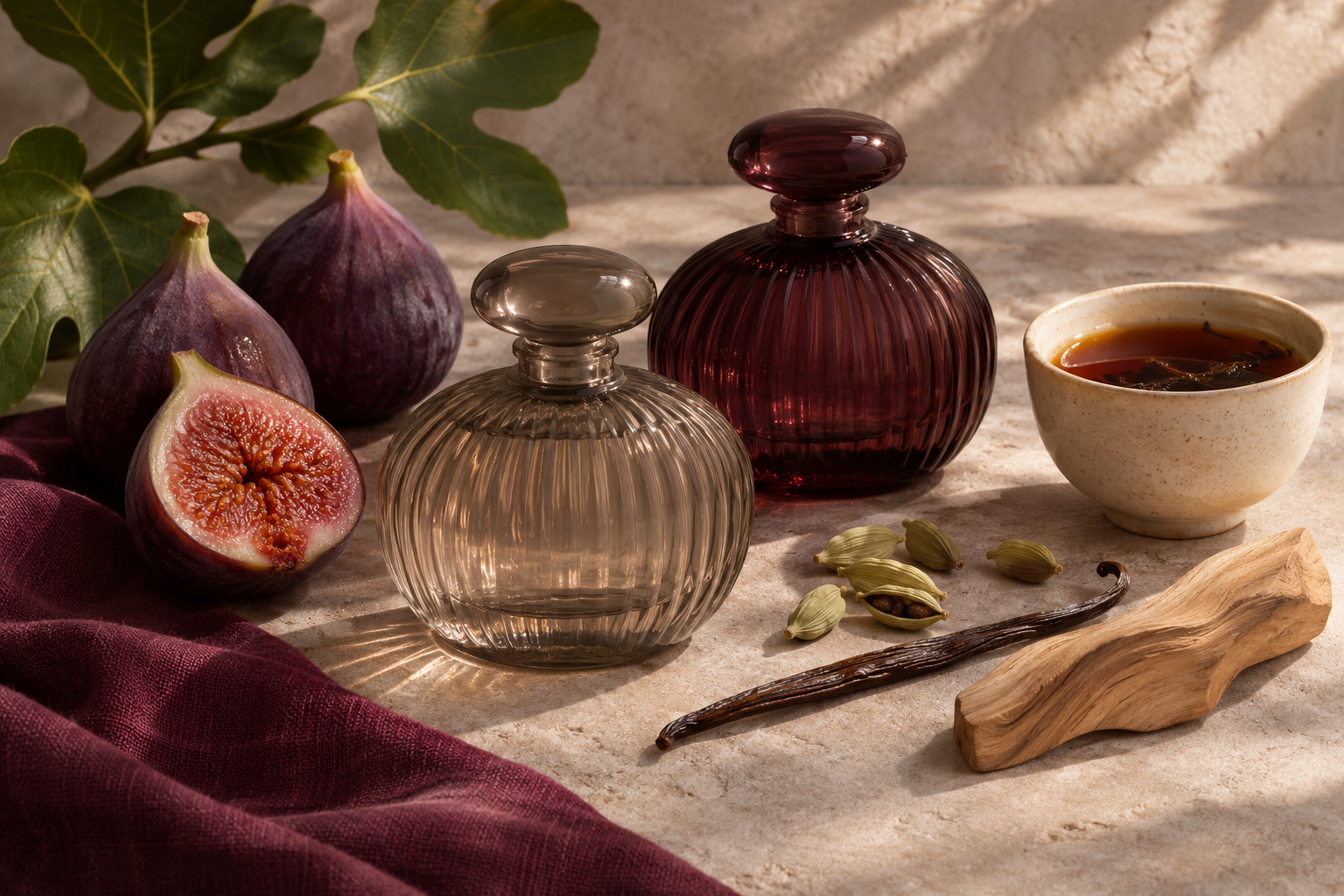
Vanilla and patchouli give Gris Charnel Extrait a different invitation from the original eau de parfum. We’d choose Gris Charnel EDP when BDK’s fig, black-tea and cardamom idea is what draws you in, with iris and woods adding to the appeal. The Extrait is the more tempting direction when you want that family resemblance with a richer, vanilla-and-patchouli emphasis. Neither is a compulsory upgrade from the other; the pleasure is choosing the version that sounds most like you.
Both belong on a shortlist for a love of woody perfume with spice, fruit and powdery floral touches. Yet knowing that they share a name only gets you so far. You might enjoy the original precisely because of its particular balance, or find that the Extrait’s extra notes make the idea more inviting. Here are the differences we’d pay attention to before giving either a place on your shelf.
Why we’d start with the eau de parfum
Gris Charnel Eau de Parfum brings fig, black tea and cardamom together with iris and bourbon vetiver, finishing its note list with Indian sandalwood and tonka bean. It is an appealing combination when you enjoy woods but want more to explore than a spare cedar or vetiver theme. Fig and tea give you a different starting point from the citrus-led colognes that often fill a fragrance wardrobe.
The iris is part of the attraction, too. Gris Charnel has a woody, powdery character, so we’d approach it with an interest in that side of perfumery. You don’t need to want a big floral bouquet to appreciate the idea of iris alongside sandalwood. Equally, a dislike of powdery perfumes is a useful reason to pause, even when the mention of fig and black tea sounds wonderful.
Tea is a good reason to be curious about the EDP, but we’d give equal thought to its sandalwood and tonka. The choice makes more sense when that woody base appeals to you, rather than when you’re chasing a perfume that revolves around tea alone. Iris and vetiver are part of the same picture. You can love the idea of a tea note and still prefer a different combination around it.
BDK Parfums Gris Charnel Eau de Parfum
Start with the EDP when you’re drawn to fig and black tea framed by powdery, woody notes.
What makes the Extrait a separate temptation
Gris Charnel Extrait keeps cardamom, black tea and fig in its opening notes, with iris, cistus and vetiver at the heart. Its base adds Indonesian patchouli, Madagascan vanilla and cedar alongside sandalwood and tonka. That is a meaningful change in the composition, not simply a new concentration label attached to an otherwise identical perfume. We’d be especially curious about it when vanilla and patchouli are favourites of yours.
Vanilla gives you a useful bridge if you already enjoy warm vanilla perfumes and are curious about fig and tea. Patchouli gives you a second point of interest: we’d keep the Extrait high on your shortlist when you like that woody note as part of a more layered composition. Its appeal is the combination, so a strong preference against patchouli is worth taking seriously even when the vanilla sounds enticing.
Cistus and cedar are also part of the Extrait’s listed notes. That gives you another reason to consider its woody-amber direction, beyond a wish for more vanilla. When the tea-and-fig opening is only half of what you want, the fuller woody setting could be the attraction. If you mainly want to investigate black tea in perfume, we’d still begin with the EDP rather than letting its relative’s extra ingredients distract you.
BDK Parfums Gris Charnel Extrait de Parfum
Choose this richer interpretation when vanilla and patchouli are the part of the Gris Charnel idea that excites you.
Fig and tea don’t have to mean a dessert perfume
Fruit can be part of a perfume without turning it into a pudding. Here, fig sits among tea, spice, iris and woods, so we’d keep the whole arrangement in mind. A fig note alone doesn’t promise a sugary result, and black tea doesn’t promise that you’ll recognise your favourite drink in the fragrance. Those names are useful clues to your curiosity, rather than a guarantee of one literal smell.
The same goes for the Extrait’s vanilla. It makes that version relevant when you enjoy vanilla with woods and amber-like warmth, but the rest of its composition still matters. We’d explore the Extrait for that combination, rather than expecting a straightforward vanilla perfume with everything else kept quiet. Our guide to perfume notes can help you keep a note list in perspective without turning choosing a scent into homework.
How much should the concentration matter?
The Extrait is concentrated at 30%, a concrete difference worth knowing, but we’d put its composition ahead of the percentage. The number doesn’t tell you whether you’ll prefer its vanilla, patchouli and woods. Nor does it promise a particular wearing time or projection on your skin. An attractive concentration label is much less useful than knowing which version you actually look forward to wearing.
For a fair comparison, give each fragrance its own space and a light application, following the product directions. Let the opening settle before deciding. You don’t have to prove that one lasts longer to choose a favourite; enjoying the whole perfume is enough. That approach is particularly helpful when you already love the EDP and want to find out whether the Extrait adds something you want.
A size that suits your kind of fragrance collection
Both versions have 10, 50 and 100 ml formats in BDK’s range. That makes the amount a separate decision from the scent. A smaller format can be an appealing way to keep a perfume for a particular mood, while a larger bottle makes more sense when you already reach for that fragrance regularly. We’d settle on the version first, then choose an amount that fits your habits.
Your fragrance wardrobe doesn’t need both simply because the names match. The EDP might add an interesting fig-and-tea direction to a shelf full of citrus perfumes; the Extrait might appeal when your favourite part of a woody perfume is its vanilla or patchouli warmth. There is room to enjoy a family resemblance without collecting the whole family. One well-chosen bottle is a lovely outcome.
For a gift, knowing that someone wears Gris Charnel is a promising start, but their preferred version matters more than a surprise upgrade. Our advice on choosing a fragrance gift keeps that personal preference at the centre. A familiar favourite in a useful size can be more thoughtful than a different composition chosen for the grander-sounding concentration.
Our choice between the two
Gris Charnel Eau de Parfum would be our first stop for the original fig, tea, iris and sandalwood idea. We’d choose the Extrait when its added vanilla, patchouli and richer woody-amber direction are exactly what you want to explore. Keep alcohol-based perfume away from flames and check ingredients for known sensitivities. The name gives you a family resemblance; your favourite notes give you a much more personal way to choose.