Reviewed and updated: October 19, 2026
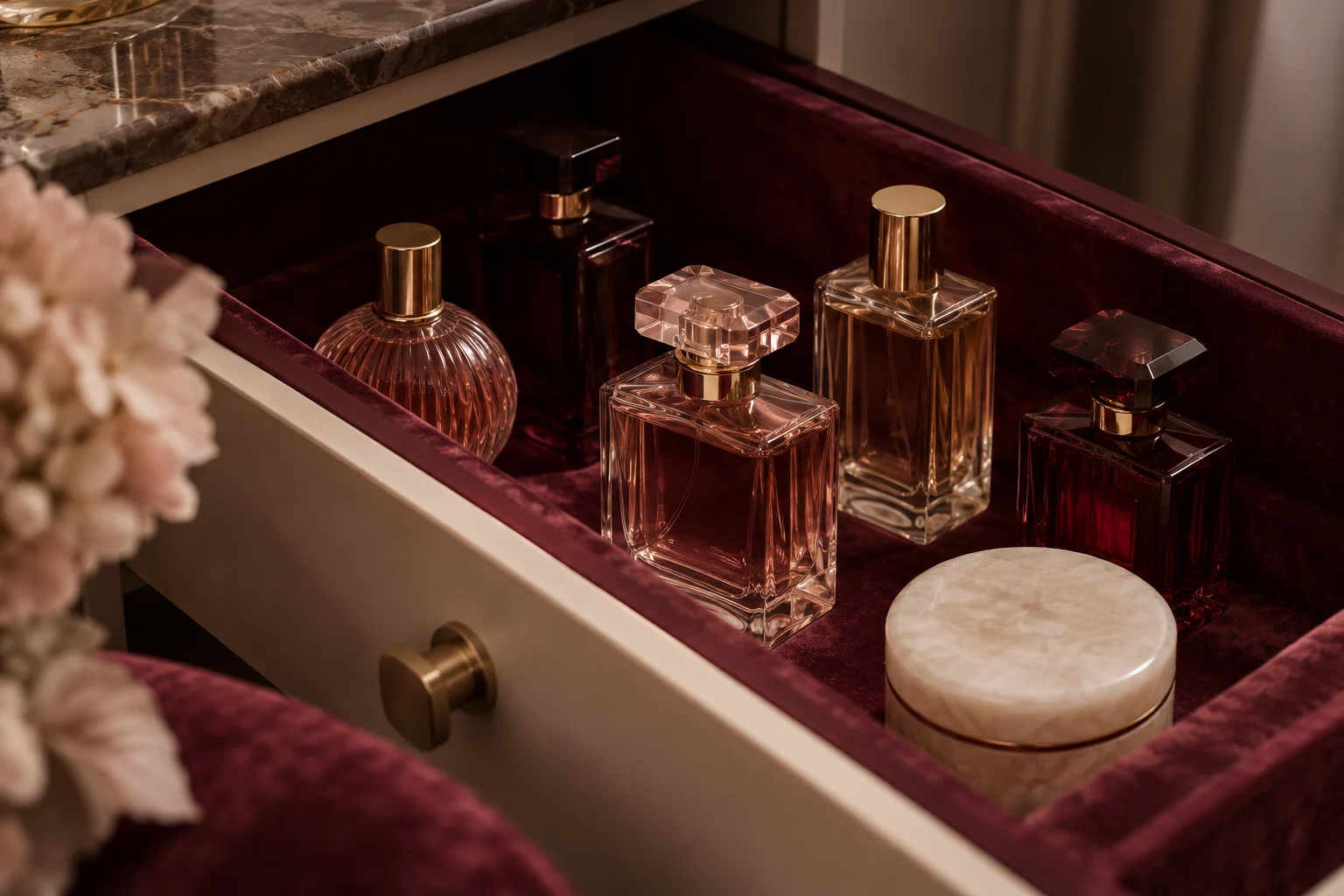
Perfume lasts best when temperature, light, air exposure, and handling stay stable. A closed drawer or cabinet usually protects more than a decorative sunny shelf.
Choose a cool, dark place
Direct sunlight and repeated heat accelerate change in fragrance and packaging. Use a drawer, cabinet, or closet away from radiators, windows, and hot appliances. Ordinary stable room temperature is usually more useful than trying to chill and warm the bottle repeatedly.
Avoid the bathroom cycle
Bathrooms swing between warm, humid showers and cooler dry periods. Moisture can affect boxes, labels, caps, and metal decoration even when the bottle remains sealed. Store daily fragrances in a nearby bedroom cabinet and bring one out only when applying it.
Keep the bottle upright
An upright bottle reduces prolonged contact between liquid and cap or sprayer components and lowers leak risk. Make sure the sprayer sits firmly, replace the cap when provided, and do not store a leaking bottle on its side beside fabric or finished wood.
Preserve the original box when useful
The box adds light protection and helps keep dust from the sprayer, especially for bottles used occasionally. It also preserves batch and ingredient information. A damaged, damp, or moldy box should not be kept merely for resale appearance.
Minimize air and transfer
Every decant adds handling, new materials, and possible contamination. Use a compatible clean atomizer only when travel or sharing makes it useful, label it clearly, and keep the original bottle closed. Never pour unused fragrance back into the main bottle.
Watch for meaningful change
Color can deepen naturally, but sour odor, separation, sediment, leakage, or a spray mechanism that behaves differently deserves attention. Compare with your own earlier wear rather than social-media photographs taken under different lighting. Stop using a product that irritates skin.
Protect packaging and people
Keep glass bottles where they cannot fall, away from children, pets, flames, and high heat. Fragrance contains volatile ingredients and should never be left in a car. Wipe drips promptly and avoid storing valuable bottles on unsealed stone or wood.
Rotate what you can finish
A small wardrobe stored well is easier to use than a large collection exposed for decoration. Put current-season bottles in the most accessible shaded spot and review neglected fragrances before buying more. Storage protects quality, but it does not make every bottle improve indefinitely.
Quick checklist
- Use a cool, dark, stable location.
- Avoid humid bathroom storage.
- Keep bottles upright and closed.
- Retain clean boxes for light protection.
- Use compatible labeled decants.
- Inspect leaks and scent changes.
Why these checkpoints matter
- Use a cool, dark, stable location. This defines the starting condition and prevents the rest of the process from resting on an assumption.
- Avoid humid bathroom storage. This narrows the choice to evidence you can verify on the exact label, model, or scene.
- Keep bottles upright and closed. This checkpoint reduces avoidable risk before another variable is introduced.
- Retain clean boxes for light protection. This keeps the routine compatible with the person, product, material, or equipment involved.
- Use compatible labeled decants. This creates a repeatable step instead of relying on memory or marketing language.
- Inspect leaks and scent changes. This final review catches changes in condition, availability, or instructions before the next use.
Common questions
Should perfume be refrigerated?
Usually stable cool room storage is simpler; follow brand guidance and avoid repeated temperature cycling.
Can I display bottles near a window?
The display may expose them to light and heat. Use a shaded cabinet and bring bottles out briefly.
Does perfume expire on one exact date?
Not always. Track opening, storage, odor, appearance, and maker guidance, and stop if the product changes or irritates skin.
Keep the decision useful
Write down the exact model, label, starting condition, and result. Change one variable at a time and return to the official instructions when anything is unclear. A short record makes the next decision easier and keeps an isolated result from becoming a rule that does not fit a different product, person, material, or environment.
Review the information again before repeating the process. Stop when comfort, safety, condition, or the manufacturer’s instructions provide a reason to stop. A useful routine stays simple because every step answers a real question.