How to Apply Cologne Correctly (Updated 2026)
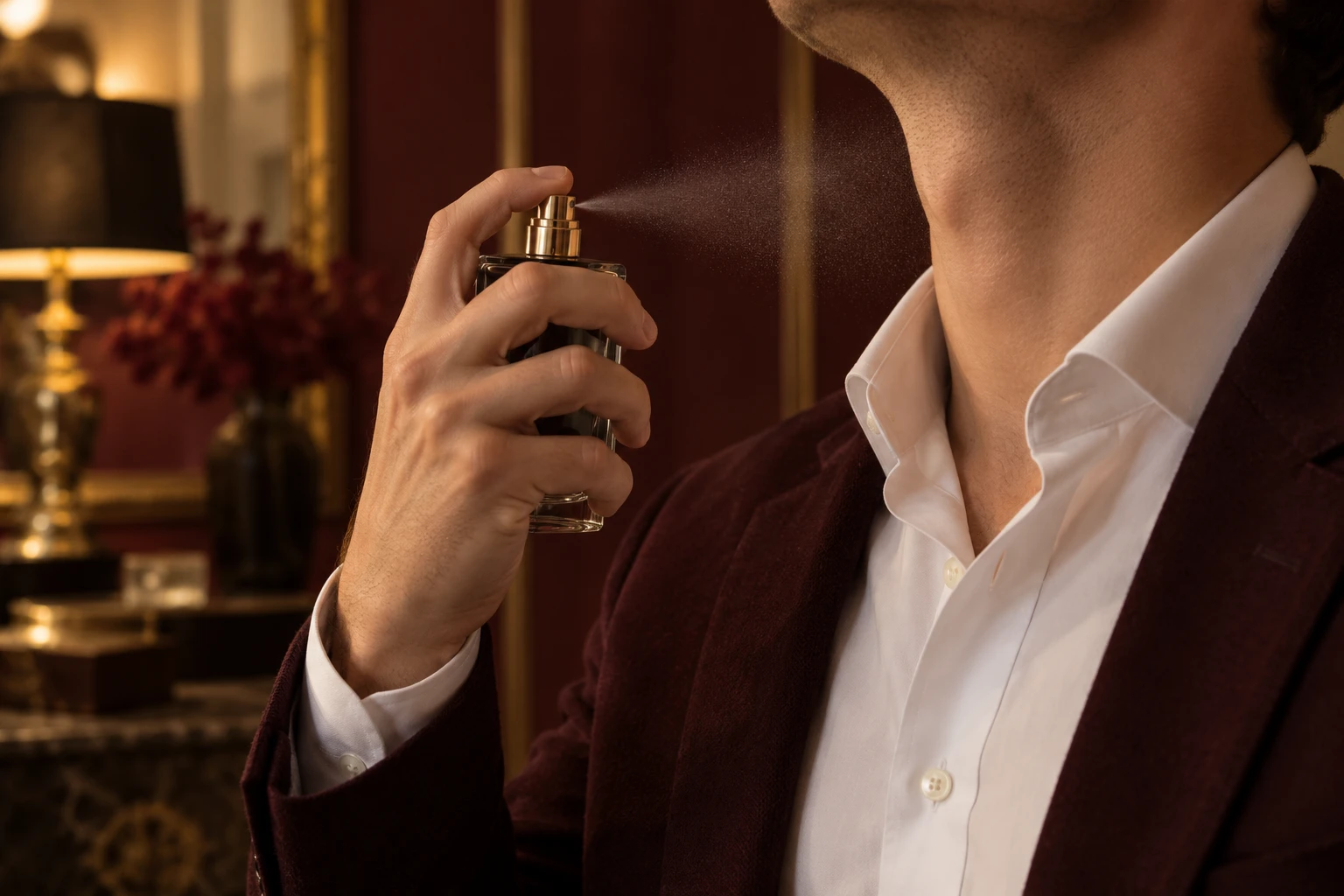
Applying cologne is best kept simple: start with a little on clean, dry skin, let it settle and give it time before deciding you need more. We recommend learning one fragrance’s behavior through an ordinary day rather than following a universal spray count. You are aiming for a scent you enjoy wearing comfortably, with enough space for everyone around you to enjoy their day too.
There is no prize for using every pulse point. A modest application can feel just as satisfying as a generous one, especially when you will be sitting close to someone. Once you understand your bottle, its atomizer and your setting, the routine becomes easy. Until then, a light hand gives you far more room to adjust.
Start with the directions on your bottle
Check that the product is intended for skin and follow its application instructions. A spray, splash, roll-on oil and solid perfume do not dispense the same amount, so advice for one format cannot simply be transferred to another. Cologne is sometimes used casually to mean fragrance; the actual label is the more useful guide to what you are holding.
Apply after washing, once your skin is dry and comfortable. Fragrance does not replace washing or deodorant, and spraying it over another strong scent can make the result harder to judge. If you use a moisturizer, let it absorb first and keep it lightly scented or unscented while you learn the cologne. Avoid layering several products just to make the routine seem more complete.
Choose a small area such as the upper chest or a wrist, keeping away from your face. Hold a spray at the distance the maker recommends and let the mist settle naturally. Do not spray into your eyes, mouth or nose, and avoid broken, freshly shaved or irritated skin. You can keep the routine straightforward without treating every warm part of your body as a target.
Give a small application a fair chance
One or two sprays can be a reasonable cautious starting point for many spray fragrances, but they are not a rule that fits every bottle. Atomizers dispense different amounts, and perfumes have different compositions. Begin with less when you are unsure. The aim is to learn what feels comfortable in your setting, not to meet a number someone else uses.
Leave the application alone instead of rubbing wrists together. Letting it dry naturally makes the experience easier to compare, without spreading wet fragrance onto other areas or objects. You do not need to keep your wrist under your nose either. Give yourself a little distance and notice the scent as you move through your day.
The opening may be more noticeable than what follows, and your own perception can change as your nose adjusts. That does not automatically mean the perfume has vanished. Step into fresh air before deciding to add more. A fragrance you barely notice up close may still be apparent to someone beside you, particularly in a car or a small room.
If you move from a small sample to the full bottle, learn the spray again. A dab from a vial and a full press of an atomizer are not equal doses. Likewise, a travel sprayer may dispense differently from the original bottle. Keep the fragrance name and concentration constant while you get used to the new applicator, then judge the result after it settles rather than copying your old number of presses automatically.
Let the setting guide the amount
An outdoor afternoon gives fragrance a different context from a shared office, classroom or restaurant. Heat and activity can also change how noticeable it feels. Start conservatively when you will be close to other people, and respect any fragrance-free policy or request. Your favorite perfume can still be a poor choice for a particular shared space.
For a first wearing, pick an ordinary day when you can notice the opening and return to the scent later. Keep a quick note of the exact fragrance, amount, weather and how comfortable it felt. Change one thing next time rather than adding sprays, switching lotion and layering a second perfume all at once. That makes the adjustment much easier to understand.
Concentration labels do not settle the amount for you. An eau de parfum may differ in composition from a related eau de toilette, rather than simply requiring one fewer spray. Our guide to concentration names explains the distinction. Learn the exact version you own instead of borrowing a routine from a similarly named bottle.
Skip the perfume cloud and other shortcuts
Spraying a cloud and walking through it makes it harder to control where the liquid lands. It can reach your eyes, settle on clothing or surfaces and use more product than you intended. Direct, careful application according to the label is simpler. Keep the nozzle pointed away from other people, pets and anything you do not want to spray.
Do not assume perfume is harmless to fabric because it smells lovely on skin. Ingredients can mark delicate materials or finishes. Follow the garment’s care instructions and the perfume’s directions, and avoid spraying clothing when you are unsure. A scarf or collar can also retain an earlier fragrance, so it may confuse your impression when you try something new.
Reapplying in a shared restroom, car or dining area can leave other people in the mist. If a top-up is appropriate, choose a suitable private, ventilated place and use it sparingly. A travel atomizer is convenient, but it is not permission to refresh continuously. Keep transferred perfume clearly labeled and use a clean container intended for fragrance.
Keep comfort ahead of persistence
If your skin stings or becomes irritated, stop using the product and gently wash the area with mild soap and water. Do not scrub or add another scented product to cover it. Seek appropriate medical help for swelling, breathing difficulty or other serious symptoms. Natural ingredients and an expensive label do not make a reaction something to ignore.
Fragrance tolerance varies, including for someone near you. If a companion says a scent is bothering them, reduce the exposure and avoid applying more. It need not become a debate about whether the perfume is objectively strong. The most considerate application is one that fits the people and place, as well as your own preference.
Make your routine easy to repeat
Once you find a comfortable amount, keep the bottle upright with its cap on in a cool, dark, stable place. Avoid a hot car, a sunny windowsill or steamy bathroom storage. Many fragrances contain alcohol, so keep them away from flames and sparks, and store bottles and decanting tools safely out of reach of children and pets.
If you want to explore beyond application, our broader guide to wearing perfume brings the routine together. Our summer perfume guide can help when you are curious about a fresher scent for warmer days. Whatever you wear, let a small, thoughtful application do its work before reaching for another spray. Enjoying your cologne should feel like a pleasant finishing touch, not a task you need to keep checking.