Cologne vs. Deodorant: Different Jobs Explained (Updated 2026)
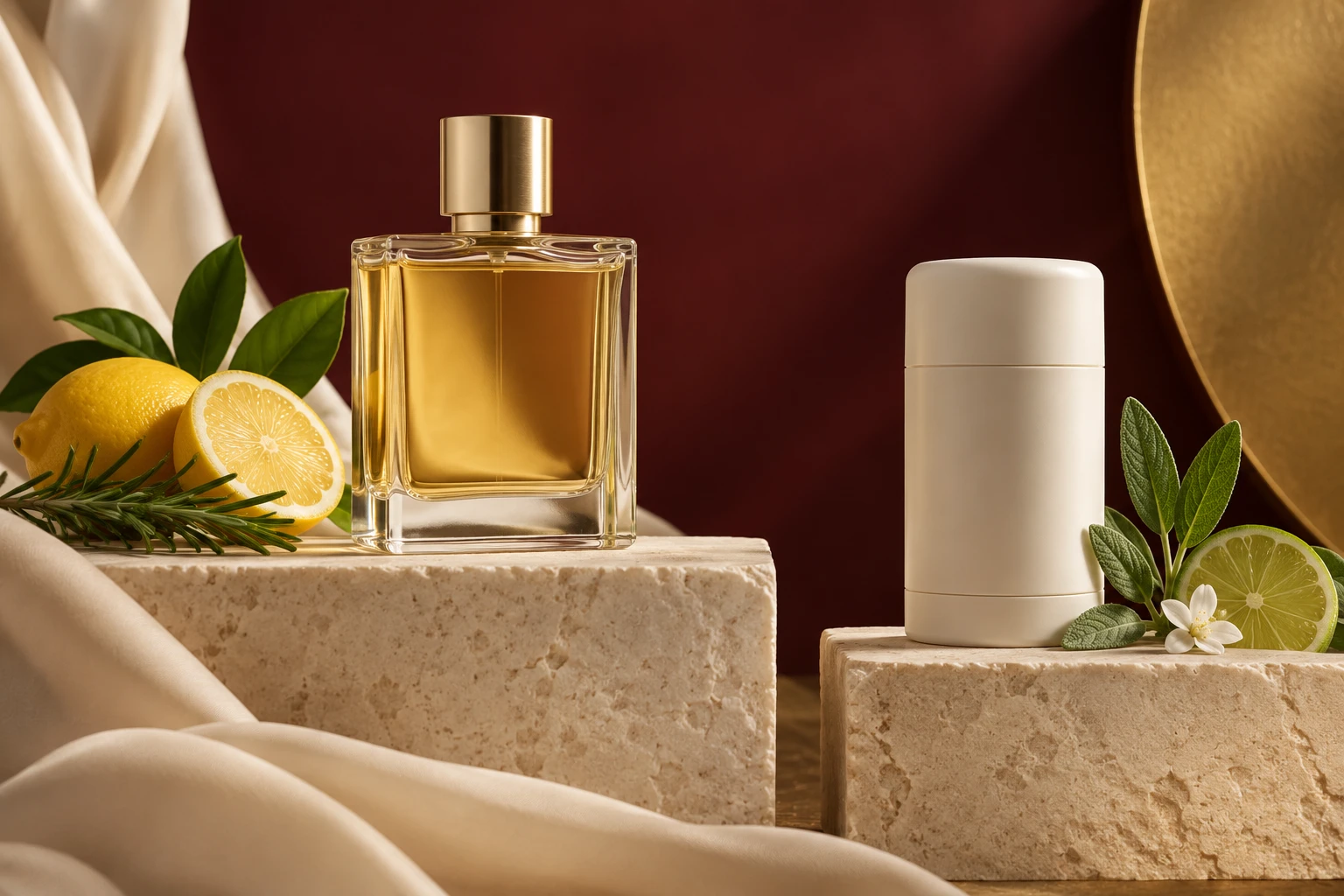
Cologne and deodorant can both be part of getting ready, but they do different jobs. Choose cologne for a fragrance you enjoy wearing, deodorant for odor care, and antiperspirant when reducing sweat is the goal. You can use suitable products together without asking one bottle to do everything.
We would begin with a comfortable basic routine, then add fragrance if you want it. A lovely woody or citrus scent is the enjoyable finishing touch, not a substitute for washing or a way to turn an unsuitable deodorant into the right one.
Cologne is the scent you choose to wear
Cologne lets you enjoy a particular fragrance: perhaps bright citrus, aromatic herbs, soft woods or something warmer and sweeter. It is a choice about how you want to smell, rather than a treatment for perspiration. Spraying it over an existing odor does not remove the source of that odor.
The word cologne is also used in more than one way. It can refer broadly to a wearable fragrance or appear as a specific Eau de Cologne label. Our guide to EDP and EDT explains related concentration names. None of those terms makes perfume an antiperspirant.
Use fragrance only where its directions allow, usually with a light application on appropriate skin. Do not automatically spray it into your underarms because that is where you use deodorant. Avoid eyes, irritated or broken skin and freshly shaved areas. Fabric use also depends on both product directions and garment care.
Deodorant helps with body odor
Deodorant is designed to address odor. Some formulas use ingredients that help control odor-producing bacteria, while others include scent to help mask smells. The exact formula matters, so look at the product’s purpose and directions rather than judging its function by how strong its fragrance seems.
A deodorant can be scented or fragrance-free, and it can come as a stick, cream, roll-on or spray. The delivery method does not by itself tell you where it belongs on your body. An underarm product and a product labelled for broader external use may have different application instructions and restrictions.
Do not assume that a deodorant stops sweat. If reducing perspiration is what you need, check whether the exact product is also an antiperspirant. Aluminum-free wording can help distinguish some products, but it does not establish that a formula will be irritation-free or suitable for every person.
Antiperspirant adds a sweat-reduction function
Antiperspirants reduce perspiration at the application site. A product labelled antiperspirant and deodorant combines sweat and odor purposes. In the United States, the antiperspirant function is regulated as an over-the-counter drug function, so read its Drug Facts and warnings as well as the scent name on the front.
Apply it to the area and at the time directed on your package. Some routines involve dry underarm skin and particular timing, but your own product’s instructions should lead. Do not move it to other body areas or increase the amount simply because you want a stronger result.
If sweating is persistent, unusually heavy or has changed in a way that concerns you, speak with a clinician rather than layering more scented products over it. More fragrance cannot answer a health question. There may be a more appropriate way to manage the problem than repeatedly changing the smell of your routine.
Build the routine around what you need
Begin with washing and clean clothes, then use your appropriate odor-care or sweat-care product as directed. Let each product settle or dry according to its instructions before dressing. There is no need to turn getting ready into a complicated fragrance layering project before the basic routine feels comfortable.
If you want cologne as well, add it lightly in a permitted application area. Our perfume application advice helps you make that finishing touch more measured. Keep perfume guidance separate from a deodorant label: a spray count for one fragrance does not become instructions for an aerosol grooming product.
For a gym bag, keep the purpose clear. Washing and changing out of sweaty clothes do something different from adding fragrance. If the setting offers no chance to freshen up properly, a stronger spray is not a replacement. Follow the venue’s rules and avoid creating a cloud in a shared changing room.
Give your favourite fragrance some breathing room
If your cologne is the scent you love most, a fragrance-free deodorant can make the combination simpler. A strongly scented wash, deodorant, hair product and perfume may all add their own ideas. They do not have to match, but you should enjoy the whole result rather than feeling surrounded by competing fragrances.
You can also enjoy a scented deodorant without wearing cologne at all. There is no missing step to correct if that is enough for you. A practical product with a scent you like can already make the morning a little more pleasant, especially when you prefer a short routine.
If you try a new combination, change one product at a time. That makes it easier to notice what you enjoy and identify anything uncomfortable. You may find that a woody deodorant works alongside a favourite fragrance, or decide that keeping the background unscented lets the perfume make a clearer impression.
Let comfort set the limit
Stop using a product that causes irritation, burning or a rash. Do not assume that discomfort is a normal stage you need to push through. Seek appropriate medical advice for persistent symptoms, and urgent help for serious symptoms such as facial swelling or difficulty breathing.
Natural, clean, sensitive and aluminum-free descriptions do not guarantee that a product will suit your skin. Fragrance and other ingredients can still cause problems for some people. If you already know you react to a particular ingredient, read the exact formula information and ask a qualified professional when you need help choosing.
Keep aerosols and alcohol-based fragrance away from flames, sparks, smoking and heat. Follow each container’s storage and disposal warnings, and keep products away from children and pets. Do not puncture or refill a pressurized can or transfer a grooming product into a container that obscures its identity and instructions.
Keep other people in the picture
Your nose can become used to a scent while someone nearby still notices it. Resist reapplying cologne simply because it no longer catches your attention. Take a break before judging the amount, and remember that a car, desk area or restaurant table brings people much closer than an open outdoor space.
Respect fragrance-free requests at work, school, venues and home. Someone else’s discomfort is not a challenge to find a different strong scent. You can keep your necessary care routine while asking about suitable fragrance-free options, and save a favourite perfume for a setting where it is welcome.
Choose the useful job, then enjoy the scent
When you shop, read the complete name, format, amount and intended use. A matching scent name on a wash, deodorant, antiperspirant and cologne does not make them interchangeable. Compare equivalent formats first so the purchase solves the problem you actually wanted to address.
Once that practical choice feels right, fragrance can be the fun extra. Our summer perfume suggestions offer another mood to explore. Keep the distinction simple: wash for cleanliness, choose the appropriate odor or sweat product, and wear cologne because you enjoy its fragrance. Each earns its own place.